9v9 Offense
The best starting offense in 9v9 football is a run game behind your three linemen and a tight end, with Mesh and Flood from the 11v11 pages as the passing answers. This is the first format where blocking is legal, so every written run and concept on this hub opens its 11v11 page, drawn for a full line and played here with two fewer players.
Pick your format
Everything below is written for this format. Press the pill again for all of them.
What changes at 9v9
The first format with a line
Three linemen and a tight end mean blocking schemes finally exist, so the run shelf here lists zone, power, trap and the rest rather than only handoffs and reverses. Each opens the 11v11 page that draws the scheme with a real line.
Tackle football with fewer bodies to block
A 9v9 defense can put five on the line against your three and a tight end, so there is always a defender you cannot block. Plan every run around which one that is, the same arithmetic the 5-2 front is built on from the other side.
Borrowed pages, drawn for eleven
No offense page is written for 9v9 yet, so written concepts, runs and situations all open their 11v11 versions. The play collection below is the part drawn for nine players.
Start here
- 1Power, the run to install firstEveryone playside blocks down and a guard pulls, the run that gains two yards against a crowded box.
- 2Inside zoneThe zone scheme your three linemen and tight end can run from the gun, reading one double team.
- 3Beating the blitzA hot answer before the snap, because in tackle football a blitz sends more than you can block.
Concepts
Each written concept opens its 11v11 page, built behind full protection. At nine a side the protection is thinner, so lean on the quicker reads in each. The first two simulate for everyone; the rest need a Coach account.
 Mesh
MeshTwo crossers run opposite ways two yards apart, so any defender chasing one has to get through the other.
QB reads
Which crosser comes out of the traffic clean. It is a look, not a progression.vs Man
Both defenders arrive on the same grass at the same moment. One goes over, one goes under, and whoever goes under is late. Flood
FloodThree routes to one side at three depths, flat then out then sail, stacked in a single vertical slice of field.
QB reads
High to low. Look at the sail first; the moment a defender commits, the level above or below him is open.vs Man
Three routes, three defenders, nobody wrong. Against man a flood is three separate races down one sideline. Four Verticals
Four receivers running straight, spaced so no deep defender can cover two of them.
QB reads
Count the deep defenders before the snap. Three deep means the seams win; two deep means the middle does.vs Man
Four one-on-one races with no help. The concept is doing nothing. Whoever is losing his matchup is the throw. Spot
SpotA corner over the top, a hitch sitting underneath and a flat running away from both, a triangle out of one bunch.
QB reads
The flat defender. If he runs with the flat, the hitch is open behind him; if he sits, throw the flat.vs Man
Traffic. Three receivers off one spot means three defenders trying to follow through the same two yards of grass. Smash
SmashA hitch at five yards under a corner route at twelve, both to the same side and in the same throwing window.
QB reads
The deepest of the two defenders. If he stays, take the hitch; if he leaves, the corner is behind him.vs Man
No conflict at all. The corner sits on the hitch, the safety runs the corner route, and smash becomes two separate one-on-ones. Slant-FlatSoon
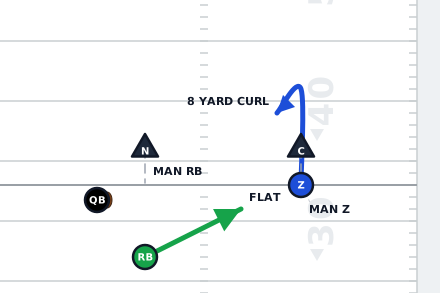
One receiver breaking inside, a back running outside underneath him. Two routes, opposite directions, one defender between them.
QB reads
The flat defender, and nobody else. He picks one and you throw the other. One read, one beat.vs Man
Both are covered by whoever is on them. The flat is a hard cover from inside leverage, the slant a hard cover from outside. StickSoon
An inside receiver to five yards who sits down against zone and keeps running against man, with a flat route under him.
QB reads
Read the coverage off the stick route itself: if he sat, it is zone and he is open; if he ran, it is man and you have the flat.vs Man
The stick never stops, so the defender never gets to pass him off. It is a chase, and the flat underneath is a second problem. Double SlantsSoon
Two receivers on the same side both breaking inside, stacked so one defender is between them.
QB reads
Whichever slant the inside defender does not take. Fast, flat and off the back foot.vs Man
Two inside breaks from outside leverage. Both defenders are running across the field with no help inside them.
Formations
Where everyone lines up before the ball moves. Every formation page covers each team size in its own section, so these are the same twelve wherever you coach.
 Bunch
BunchThree receivers clustered inside about six yards, usually to one side, with nothing outside them.
What it creates
Traffic before the snap. Three defenders have to stand in one small square of grass, then the receivers leave it in three directions.vs Man
Three defenders in a space the size of a car, each obliged to follow somebody out of it. Whoever guesses wrong is beaten at the snap, and nobody has run a route yet. Trips
TripsThree receivers to one side, spread across the field rather than clustered, and one or none to the other.
What it creates
An arithmetic problem. Three receivers running into two defenders' areas leaves somebody uncovered before anyone has run a good route.vs Man
Man travels with the receiver rather than the space, so spreading out costs the defense nothing. Three defenders follow three receivers and trips has bought you very little. Stack
StackTwo receivers on one track, one directly behind the other, rather than side by side.
What it creates
A free release for the back man. Nobody can get hands on him without going through the receiver in front, so he leaves the line clean every time.vs Man
Two defenders standing in each other's way, having to agree before the snap on who takes the front man and who takes the back one. Whichever they pick, one of them starts late. Empty
EmptyNobody in the backfield. Every eligible player is split out, and the quarterback stands alone.
What it creates
Maximum receivers and a defense with nothing left to guess about. Every player who could catch it is already where he is going to start from.vs Man
Everybody is covered and nobody is spare, because the offense has put every eligible on the field and the defense has had to answer each one.
9v9 play collection
From the premium collection: diagrams without the written breakdowns the concepts above have.
Sprint Flood
FloodThe one diagram in the set that labels its players, so this is the most literal of the eight. The quarterback sprints to the trips side and three routes climb in front of him at three different heights: a quick out underneath, a deeper out over it, and the outside man digging back across the middle behind both. The back seals the edge so the sprint has somewhere to go. Read it low to high and throw on the move; if all three are covered the backside slant is the check-down, and if nothing is there run it.
Overload
CrossersThree receivers cross into the same half of the field at three different depths while the fourth runs off the coverage on the other side. Against man it is three separate footraces and somebody wins one; against zone the three of them arrive stacked on top of two defenders and the middle one comes open. Stagger is everything here. Tell them to hold their depth and not drift into each other, because two crossers at the same height cover the same man.
Drive
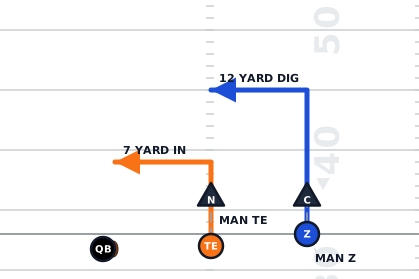
High-LowA two-level bind on the middle of the field. The shallow crosser runs underneath everything and the dig comes in behind him at twelve, so the linebacker who takes one has given up the other. The corner off the backside holds the safety, and the back leaks to the flat as the outlet. This is the answer to a defense sitting in zone and daring you to be patient. Take the shallow every time until they jump it, then the dig is a first down.
Dagger
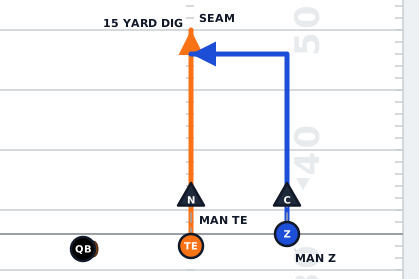
Vertical StretchThe seam runs off the safety and the dig lands in the window he just left. That is the whole play, and the order matters: the inside man clears first, the second man comes in behind him at fourteen, and the quarterback throws to grass rather than to a body. The comeback outside is the answer when the corner squats instead of turning. Do not throw the dig early. It only exists once the seam has taken somebody with it.
Deep Over
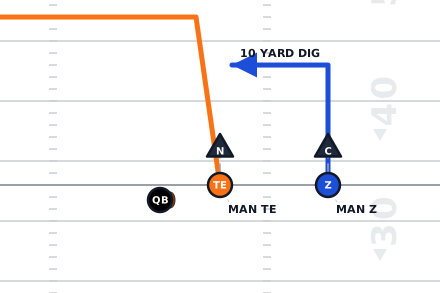
CrossersOne receiver runs the whole width of the field behind the linebackers while everything else pins the coverage in place: a vertical up one sideline, a dig coming the other way, and an out underneath. By the time the over route gets to the far hash he has usually outrun everyone who started near him. It is a slow play and it needs protection, which is why all three linemen stay in and the back checks before he releases.
Five Verticals
VerticalsNobody in the backfield and five men running at the top of the coverage. Three climb straight up the field and two bend in behind them, which turns one safety into a man who is wrong no matter which he takes. The ball has to come out, because empty means the three linemen are the entire protection, so the quarterback should know pre-snap which side he is throwing to and let it go on the fifth step. This is a shot play, not a base call.
Stick
Quick GameThree steps and gone. The inside man sticks at five and turns, the back runs to the flat underneath him, and one defender has to choose. Read him, not the receivers, and throw the one he leaves. The backside dig is there on a second look when the defense rotates to the stick side. This is the play that punishes a defense flying upfield, because the ball is out before the rush matters.
Jet Sweep
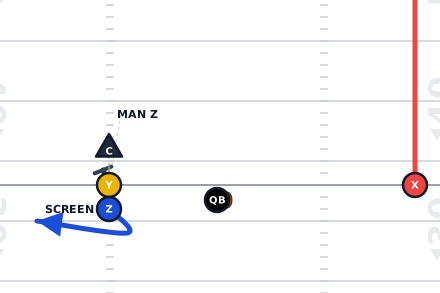
RunThe one run in the set, and the answer to a defense that has started dropping eight. The back takes it across the formation at full speed and gets to the edge before the front can reset; everybody else blocks the man in front of him and the receivers on the play side turn their defenders out. It only works at speed. A jet that has to slow down to find the hole is a two-yard loss. Best called right after a snap where the same motion produced a throw.
Run game
Every run on this shelf opens its 11v11 page where one exists, including the blocking schemes, which only the larger formats can draw. The pictures are the 11v11 drawings for the same reason.
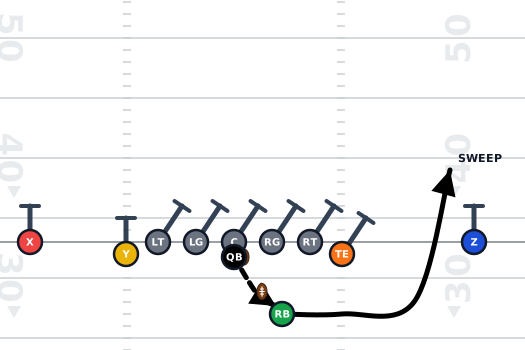 Sweep
SweepThe ball carried wide and turned upfield outside everybody, before the defense can get there to meet it.
The read
The last defender with outside leverage. If he stays home you cut up inside him; if he chases inside you keep going and beat him to the corner. Toss
TossA sweep with a faster delivery: the ball pitched to a back who is already running wide, so it reaches the edge half a second sooner than a handoff could.
The read
The same key as the sweep: the last defender with outside leverage. The toss buys the runner an extra look at him before he has to decide.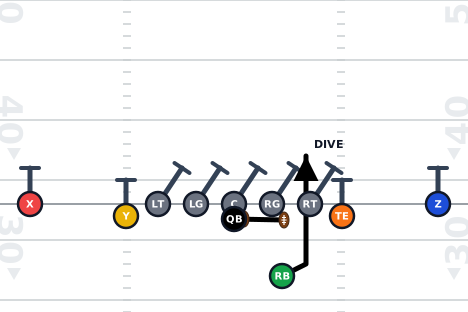 Dive
DiveThe ball handed straight ahead through the middle, as fast as the exchange allows. No angle and no race, just the shortest distance to the yards you need.
The read
The middle defender. If he sits in the hole, the back takes what the collision gives; if he drops into coverage, the hole was his and he has left it.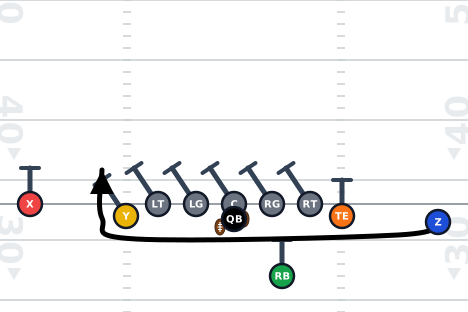 Jet Sweep
A receiver in full-speed motion takes the handoff as he passes the quarterback and keeps going. He reaches the edge already at top speed, and nobody standing still can match that.
The read
Whether anybody ran with the motion. If nobody did, you have one more player to that side than they do; if somebody did, the side he left is a man short.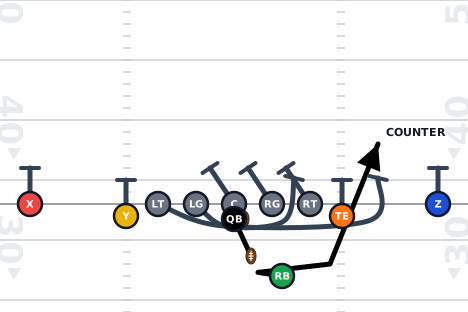 Counter
The back takes one step one way to pull the defense with him, then takes the ball back the other way into the space they just left.
The read
The defender on the side the play finishes. If he chased the first step, the counter is open; if he stayed home, the fake bought nothing.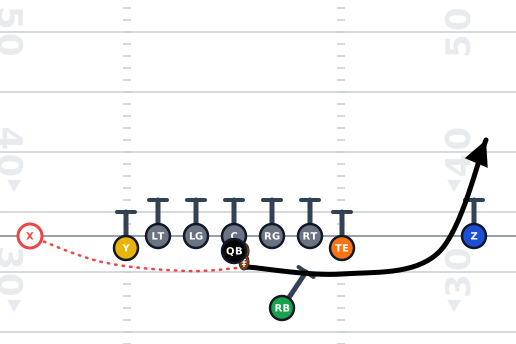 Reverse
The ball starts wide one way, then a receiver coming back the other way takes it from the runner. The ball changes direction, and so, a second too late, does the defense.
The read
The defender on the far side. If he chased the sweep, the reverse has that whole side to itself; if he stayed home, it is a slow play into a man who was waiting for it.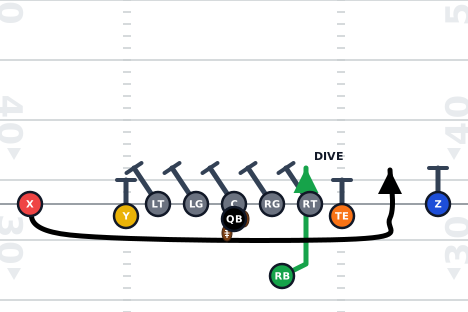 End Around
A receiver comes around behind the quarterback and takes the ball going the other way. One handoff, not two: a reverse without the part that gets fumbled.
The read
The defender on the far side, the same as the reverse. Whoever is on the side the receiver finishes has to decide whether the fake inside is real.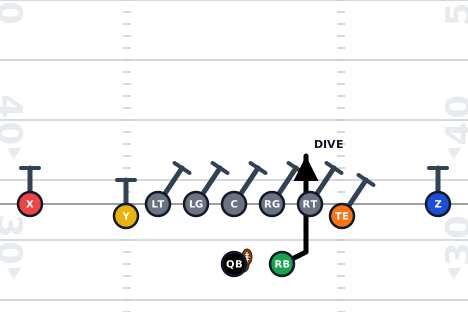 Option
The quarterback runs at one defender with the back trailing him, and leaves that defender alone on purpose. Take the quarterback and the ball is pitched; take the back and the quarterback keeps it.
The read
One defender: the pitch key, usually the edge. The quarterback does not read the defense; he reads that man, and gives the ball to whichever player he did not take.
By situation
Each situation opens its 11v11 page, written for tackle football, rather than the flag pages a nine-a-side coach would otherwise land on.
By age and level
The same game, scaled to what the players can actually execute.
- 5 to 6 year oldsThe first catch
Everybody stops, turns around, and the ball is already there.
6 playsOpen - 7 to 8 year oldsThe second read
The quarterback can look at one receiver, decide, and come off him.
6 playsOpen - 9 to 10 year oldsThe first concept
Two receivers working together on purpose instead of two receivers running.
6 playsOpen - 11 to 12 year oldsThe full progression
One, two, three and the checkdown, in rhythm and without being told.
6 playsOpen - High schoolTighter windows
Defenders who close. The ball has to be out before the receiver breaks.
5 playsOpen - Adult recNo install time
Everything has to work the first time you call it, explained in the huddle.
5 playsOpen
Change any of these for your 9v9 team
Open the play, move the routes, save it to your playbook.
Open the designer